

Travel News
The Legal ABCs of the Costa Concordia Shipwreck







As the rescue and the recovery efforts for the Costa Concordia come to a close, the legal implications are just beginning. Legal contributor Nicole Coward breaks down all the “legalese” you need to know to understand this case.
As details surrounding last month’s Costa Concordia cruise ship disaster emerge, several questions remain: who is responsible, how will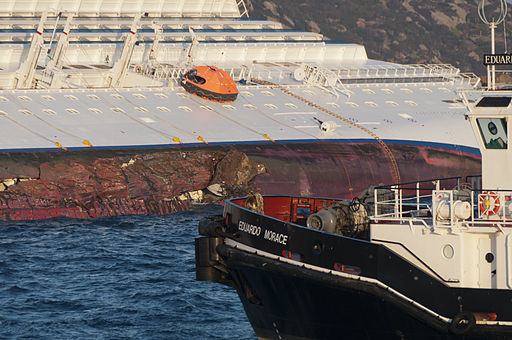 the victims be compensated and who should pay? In an international shipwreck, where conflicting laws and processes of various countries may apply, these seemingly simple questions become much more complex.
Discussion of these questions requires some understanding of “legalese” – legal terms or concepts that are probably foreign to the non-lawyer. Here are a few basic concepts you should know:
Passenger Ticket Contract: Generally, when booking a ticket, one does not realize that a binding legal contract is being formed. In reality, this is exactly what happens; the passenger ticket is a contract between the passenger and the cruise line, which lays out each party’s respective rights and obligations to one another.
Relatively speaking, passengers are provided thin protections that severely limit compensation for injuries, lost articles, trauma and other damages incurred during a voyage. Conversely, cruise lines – which largely dictate the terms of the contract – are afforded wide protections that limit their responsibilities and obligations to passengers.
As a result, the Passenger Ticket Contracts – can and will present strong obstacles to those seeking to obtain relief outside of and beyond what is stated.
Choice of Forum: A “forum” is where a legal action can be started. For example, several reports indicate that U.S. lawyers are filing actions in U.S. courts on behalf of passengers claiming injuries. However, a basic issue arises where, as with Costa Concordia ticket holders, the contract mandates that claims must be brought in the courts of Genoa, Italy.
Whether or not an action brought in a forum outside of Italy will be allowed will depend on the strength of the provisions in the ticket contract (most of which have been upheld as fair in U.S. courts) and the types of claims that are ultimately brought.
Choice of Law: Once the forum is selected, the court must choose which law to apply to resolve the claims. This can at times lead to the odd result of a court in one country being forced to understand and apply the laws of another.
For example, the Costa Concordia ticket contract dictates that Italian law be applied to any claims relating to the voyage. Even if claims are able to be brought in the U.S., those courts may be faced with applying Italian law and, where applicable, maritime or the Law of the Sea which are separate sets of laws governing international bodies of water – an exercise which may not be appealing to an American judge.
Keep reading to sees Nicole Coward recent interview with Vanity Fair’s Victoria Mather and Peter Greenberg.