








 With swine flu spreading around the globe, the World Health Organization (WHO) decided Monday to raise its pandemic alert level a notch, from level three to four. The highest level possible is six.
However, the agency stopped short of recommending full-scale border closures or travel bans because it considers them ineffective.
WHO spokesman Gregory Hartl said that screening people at borders and airports can miss those who are not symptomatic yet, while completely sealing Mexico’s borders would be economically disastrous.
Many countries such as France, Britain, the Netherlands, Italy, Hong Kong, and the Philippines have advised their citizens to avoid non-essential travel to Mexico. Many other nations, including the U.S., are screening passengers returning from trips to the Mexico and other affected countries.
 So what should you do if you’ve got long-held vacation plans that will take you to Mexico? Should you cancel? Or go anyway and encase yourself in a biohazard suit? Here are some recommendations:
First, if you’re elderly or have chronic health issues that could be exacerbated by the flu, it’s probably best not to travel until the epidemic has run its course. The good news is that many airlines are offering to change airline tickets without charging the usual fees, and many tour operators are postponing trips without penalizing participants.
If you’re heading to Mexico on a cruise, some cruise lines including Carnival, Holland America, and Fred Olsen have decided to skip Mexican ports such as Ensenada, Cozumel and Mazatlan. Currently, there is no word on if the cruise lines will waive cancellation fees for upcoming trips.
Related links on PeterGreenberg.com:
- Travel Safety & Security
- Swine Flu Outbreak Prompts Worldwide Travel Warnings, Casts Gloom Over Industry
- Travel Insurance Category
- Catching a Plane Without Catching a Cold
- Travel Health & Fitness
- The Facts on Infectious Disease and Air Travel
- Avoiding Airborne Illnesses
Check out what Peter had to say about swine flu and travel on CNN:
The U.S. State Department has issued an alert advising against all non-essential travel to Mexico, but it’s still up to the individual passenger whether or not you want to risk it.
If you do decide to venture out, bear in mind that there have been virtually no reported cases of the bug in popular resort areas like Cancun and Puerto Vallarta, but Mexico City has basically been shut down in light of the epidemic.
There are a few common sense things you can do to protect yourself when you’re traveling, whether it be to Mexico or Mongolia. Bugs spread quickly in planes, hotels and other places where people congregate, so here’s what you need to know:
 Avoid touching germy areas like armrests or remote controls then touching your eyes, mouth or nose. Companies like Travel Kleen make reusable headrest covers for use on planes to protect the seatback headrest, and Zaplex makes a remote control covers that is infused with an antibacterial agent.
Wash your hands often with hot soapy water, and bring hand sanitizer with you everywhere. Keep yourself hydrated by drinking lots of water, and use a saline nasal spray on planes to keep your nasal passage from drying out (which encourages the spread of infection).
Experts are divided on the effectiveness of face masks.
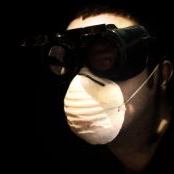 The CDC says that the fibers are not small enough to prevent transfer of airborne flu viruses, but they can provide at least a temporary barrier if a sick person sneezes on you. So if you’re sitting within two rows of a sick person on a plane, it might be a good idea.
Masks are most effective for those who are already sick, as they can limit the spray of infectious droplets when the sick person coughs or sneezes. However, their effect for healthy people is primarily psychological—so if they make you feel safer, then wear one.
Ultimately, we don’t have much control over when, how or where we’ll get sick, which is why travel insurance was invented. If your trip cost more than a few hundred dollars, it’s generally a wise idea to buy a policy.
Some insurance will let you cancel your trip for any reason before you depart, while others stipulate that you must be ill or have some other crisis. Some policies also cover emergency medical bills if you get sick while you already on vacation. Some good resources for comparing coverage and prices of different plans are https://insuremytrip.com and https://tripinsurancestore.com.
By Karen Elowitt for PeterGreenberg.com.
Related links: Washington Post, New York Times, USA Today, State Department Travel Alert, CruiseCritic.com
Related links on PeterGreenberg.com: