

Travel Tips
Focus on America’s National Parks: Documentary Filmmaker Ken Burns’ Best Idea?




 The Virtuous Traveler, Leslie Garrett, braved the bitter cold of Yellowstone National Park in winter, donning snow shoes to track down documentary filmmaker Ken Burns.
This Earth Day, she offers us a sneak peek of his latest project, The National Parks: America’s Best Idea.
It’s nothing less than democracy and the Declaration of Independence in action, says documentary filmmaker Ken Burns of America’s national parks.
To make his point, Burns and partner Dayton Duncan have teamed up again to produce The National Parks: America’s Best Idea, a sweeping documentary that looks at the creation and evolution of the national parks.
 “It’s not just pretty pictures,” says Burns. “It’s not a recommendation of which lodge to stay at. This is the history of ordinary people who dedicated their lives to preserving their Eden. The impulse to arrest our acquisitive nature has been an amazing event in American history.”
Indeed, one would expect America’s allegiance to manifest destiny to have swallowed up the national parks. Instead, roughly 84 million acres are protected and preserved, thanks to a handful of “ordinary people.”
The evolution of the parks is a fascinating one and the Burns/Dayton team brings its signature style to America’s Best Idea. While the landscape is truly spectacular, it’s that landscape’s effect on people that is explored so effectively.
Ken Burns and Dayton Duncan were in Yellowstone National Park in January to preview their documentary, which will air on PBS in September. They were eager to talk about their latest project, something of a departure from their other films, which tend to include more historical footage.
 But ultimately, says Burns, America’s Best Idea, like all his documentaries, is about who we are. “As Americans, we could do no better than follow the arc of the narrative of the national parks,” he explains. “We discover our own importance.”
Former Sierra Club president Carl Pope asks the audience, “What could be more democratic than owning a piece of your nation … together?”
Teddy Roosevelt, a noted nature-lover and a key player in the national park system, is quoted in the film: “The rich people always have their playgrounds … A classless America needs to have places in nature for the benefit and enjoyment of the people.”
It’s an oft-quoted line and meaningful to many Americans, including park employee Shelton Johnson, who is featured in the film. Johnson recalls getting off the bus from Detroit at the archway to Yellowstone, on which is inscribed Roosevelt’s words. The African-American man took comfort in the fact that the words weren’t qualified—they didn’t say “for the enjoyment of white people …” Johnson pointedly remarks, “I never got back on [the bus].”
But while this is one of Burns’ more contemporary films—it contains more new footage than any Burns film since Lewis and Clark—he nonetheless mines history to answer the question “how did this superlative place get saved?”
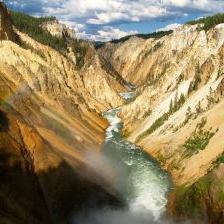
How indeed. Burns and Dayton take us as far back as the early explorers moving west who sent reports of what they were seeing to various publications back east. They were told “we don’t publish fiction,” laughs Burns. But clearly, they’d stumbled across spectacular landscape: the geothermal features of Yellowstone, for example, compile the greatest collection of geysers in the world.
 To Gerard Baker, a long-time employee of the National Parks Service and of Native-American descent, the notion that Yellowstone was “discovered” is wrong. “It didn’t need to be discovered,” he says. “It was never lost.”
True, but it was also not always protected and that’s where America’s Best Idea comes in—detailing the recognition that, if these places weren’t protected, they’d be lost.
The documentary, and the parks themselves, do inspire superlatives: biggest, tallest, longest, deepest, clearest …
It becomes clear, in the film and in real-life, that the parks truly are a treasure. As Burns points out, “there are trees still growing [in the parks] that were already saplings at the time of Christ.”
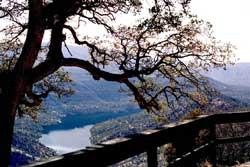 Humbling words, but much of the poignancy of the film lies in its ability to remind us that we’re witnesses and participants in the natural world. We’re part of it, not masters of it. “It reminds you of things bigger than yourself … which always makes you bigger.”
It also connects us to the past, enabling generations to share to the same experience—the same of place— decades or centuries apart.
“History allows us to come to the table,” explains Burns, “and have the discussion.” While the problems might be contemporary—climate change and increased traffic in the parks, for – the motivation behind solving them have remained constant. To preserve “America’s Best Idea.”
“These places,” Duncan reminds us, “hold answers to things that we have not yet begun to ask.”
To find out more about the film, visit https://www.pbs.org/nationalparks. To find out more about the National Parks Service, visit www.nps.gov.
By Leslie Garrett for PeterGreenberg.com. Leslie Garrett is author of The Virtuous Consumer: Your Essential Shopping Guide for a Better, Kinder, Healthier World. Visit her at www.thevirtuoustraveler.com.
Don’t miss these great articles exploring America’s National Parks:
- America the Beautiful: Five Hidden National Parks
- America the Beautiful: Five More Hidden National Parks
- The “Grand Dame” Hotels of Our National Parks
- Yellowstone National Park: Hot(ter) and Bothered
- Off the Brochure Travel Guide: Yosemite National Park
- Travel Video: Great Lesser-Known National Parks
- Tip: National Park Passes
- America the Beautiful: Hike America’s Trails