






 What’s the first place that comes to mind when you hear the term “national park?”
If you answered the Grand Canyon, you’re not alone. But you might be surprised to learn that there are actually 391 “units” in the National Park Service. A unit can include familiar areas like Grand Canyon National Park, as well as protected areas such as a National Battlefield, a National Seashore or a National Scenic Trail.
According to the National Park Service’s most recent figures, the most-visited national parks in 2006 were:
1. Great Smoky Mountains National Park
2. Grand Canyon National Park
3. Yosemite National Park
4. Yellowstone National Park
5. Olympic National Park
6. Rocky Mountain National Park
7. Zion National Park
8. Cuyahoga Valley National Park
9. Grand Teton National Park
10. Acadia National Park
But the most-visited national park units were:
1. Blue Ridge Parkway
2. Golden Gate National Recreation Area
3. Great Smokey Mountains National Park
4. Gateway National Recreation Area
5. Lake Mead National Recreation Area
6. George Washington Memorial Parkway
7. Natchez Trace Parkway
8. Delaware Water Gap National Recreation Area
9. Cape Cod National Seashore
10. Grand Canyon National Park
If you’re on a quest to conquer the major sites in America, a visit to these popular destinations is a must. But what about the contrarian traveler who wants to avoid the crowds? Out of 391 choices in the U.S., turns out there are plenty of options …
1. Dry Tortugas
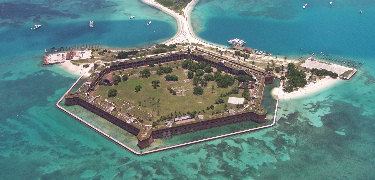 Instead of warming up in the Everglades this winter, try visiting Dry Tortugas in the Florida Keys. Dry Tortugas is located about 70 miles west of Key West in the Gulf of Mexico; it’s comprised of seven islands made of coral reefs and sand. Discovered in the 1500s by Ponce de Leon, this cluster of islands are our of the way and certainly not very crowded—in fact, there are no roads to Dry Tortugas and it’s one of the least-visited National Park units in the country. To get there, you have to take a two-hour ferry or 40-minute seaplane ride. But once you make it, the day-long experience is nothing but rewarding. Dry Tortugas is known for its white sandy beaches, excellent snorkeling, rare birds, and diverse sea life. On the island of Garden Key, you can tour of the historic Fort Jefferson, one of the largest coastal forts in the Western Hemisphere—the U.S. government began its construction for a fortress in 1846, but it was never completed; the fort was used as a military prison during the Civil War. www.nps.gov/drto
The park entrance fee is $5. Ferries: The Yankee Freedom II: $149; 700-322-0013, www.yankeefreedom.com; Sunny Days Catamarans: $120; 800-236-7937, www.sunnydayskeywest.com Flights: Seaplanes of Key West: $229 half-day or $405 full-day; 305-294-0709, www.seaplanesofkeywest.com
2. Lassen Volcanic National Park
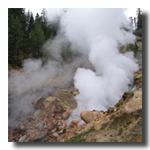 Instead of Yosemite, how about a visit to Lassen Volcanic National Park in California? Lassen’s volcano is one of only two active volcanoes in the continental U.S. The park boasts a dramatic landscape, with steaming hot springs, hissing fumaroles, and bubbling mud. Cutting through this geothermal activity is a more peaceful scene, with about 150 miles of hiking trails, forests, lakes, mountain streams, and impressive waterfalls. The dominant attraction here is Lassen Peak, the world’s largest plug-dome volcano which last erupted in 1922—you can hike up about 10,000 feet to the summit. And yet, this little-known park receives less than 400,000 visitors each year. Lassen is accessible by car, and is about four to five hours north of San Francisco (about the same travel time as Yosemite!) www.nps.gov/lavo
3. Katmai National Park and Preserve
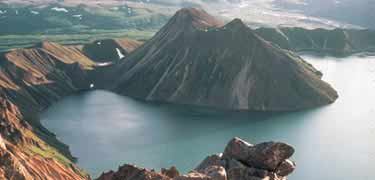 You may be familiar with Glacier Bay in Alaska, but have you ever heard of Katmai National Park and Preserve? Located in southwest Alaska, Katmai has been a national park since 1980, but the area was first preserved in 1918 to protect the Valley of Ten Thousand Smokes—a 40-square mile ash flow from the massive Novarupta Volcano eruption. Today, the park is known for its spectacular beauty with more than four million acres of untamed wilderness. Naknek Lake is the largest lake within any unit in the National Park System and Brooks River National Historic Landmark is the highest concentration (about 900) of prehistoric human dwellings in North America. Katmai is a haven for adventurous hikers, sea kayakers and anglers, but even the average traveler can visit Brooks Camp to view the abundant giant Alaska brown bears. And yet, this remote region received just under 69,000 visitors in 2006. www.nps.gov/katm
There’s no road to Katmai—you have to sail or fly. Alaska Bear Tours offers fly-in day trip from Homer for $495, and a fly-in day trip from Anchorage for $750; a four-day boat tour starts at $3,750. Katmai Coastal Bear Tours is geared toward adventure travelers and nature photographers, with four-day tours starting at $3,750, up to eight days for $6,900; www.katmaibears.com/booking.htm
4. Great Basin National Park
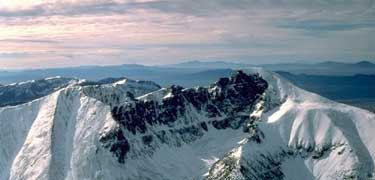 The Grand Canyon—like Yosemite—is a must-see. But you also should see Great Basin National Park, located near the Nevada-Utah border, about 286 miles from Las Vegas and stretching from the Sierra Nevada Range to the Wasatch Mountains of Utah. Fewer than 80,000 people visited in 2006, making this another one of the least visited national parks. It’s known for its stunningly diverse geography—from thick sagebrush and ancient bristlecone pine groves at the base to a fresh alpine wilderness reaching more than 13,000 feet to Wheeler Peak, intersected by icy streams and lakes. It’s also an excellent spot to go stargazing—in 2005 the National Park Service Night Sky Team found Great Basin to be one of the darkest places in the country. But the main attraction is the Lehman Caves, limestone caverns which you can explore through guided tours. There is no park entrance fee, but cave tours start at $8 for 60 minutes. www.nps.gov/grba
5. Glacier National Park
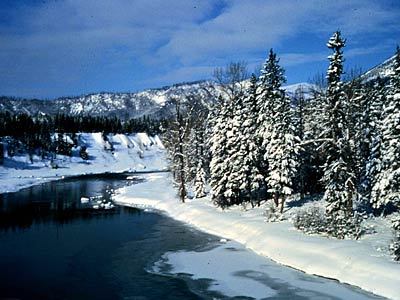
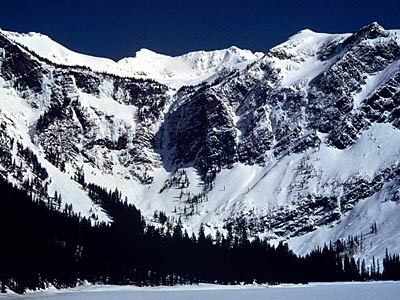 This is one to catch before it’s gone. Glacier National Park in Montana is open all year but attracts most of its 2 million visitors in the warmer months, between May and September. The historic area was once home to Blackfoot and Kootenai Indian tribes, and has more than 700 miles of hiking trails, about 200 waterfalls, and hundreds of crystal-clear lakes and tarns. But where there used to be 150 glaciers in the park, today there are about 26. Scientists are predicting that the glaciers will completely disappear by 2030. The park can get crowded—particularly on the 50-mile Going-to-the-Sun Road where you’ll soak in spectacular interior views—so travel in the shoulder season and start your drive early in the day. A seven-day auto permit is $15, and a seven-day hiking or biking permit is $10. www.nps.gov/glac
Photos courtesy of the National Park Service
Looking for even more ideas? Check out America the Beautiful: More Hidden National Parks.
Don’t miss these great articles exploring America’s National Parks: